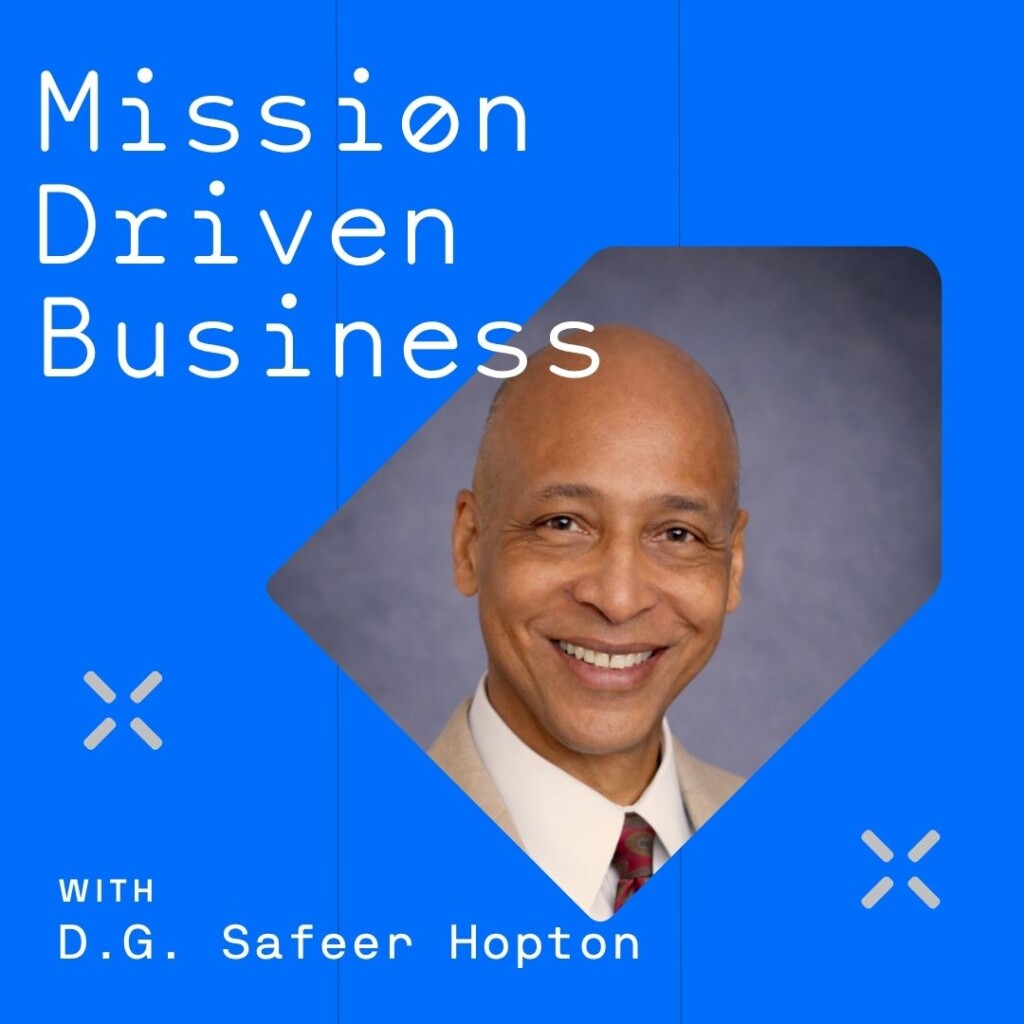
What if the way your business is structured could directly benefit your community, pool resources with like-minded people, and return profits back to its members? In this episode, Brian Thompson sits down with D.G. Safeer Hopton, entrepreneur, healer, shaman, radio host, and author of Creating a Co-op Village, to explore the cooperative business model and what it could mean for mission-driven entrepreneurs. Safeer has been building and studying co-ops for decades, and this conversation is a genuinely eye-opening introduction to a business structure that most entrepreneurs have never seriously considered.
What Is a Mission-Driven Business
Safeer defines a mission-driven business as one that is grounded in community and cooperation. A business has to be about the people first. If the sole driver is profit, and there is no real investment in the people it serves, something essential is missing. Safeer is clear that putting people first does not mean ignoring profit. When you cooperate and serve each other genuinely, abundance follows. The businesses he has seen struggle most are those generating impressive revenue while leaving their employees, customers, and communities with very little in return.
What Is a Co-op?
Many people have interacted with a co-op without realizing it. Credit unions are co-ops. So are IKEA, True Value Hardware, Carpet One, and Sunkist. A co-op is a democratically controlled, not-for-profit business structure where every member holds equal ownership and equal voting rights. One member, one vote. The co-op is neutral in race, religion, politics, and gender. What matters is whether you are aligned with what the group is building together.
At the end of each year, by law, any net revenues must be returned to members in proportion to their participation, a process called a patronage refund. Safeer traces the roots of this model back to pre-colonial Africa and tribal village economies, describing co-ops as a trickle-up system built from the ground floor of community life.
Why Choose the Co-op Path
Safeer’s commitment to cooperative economics goes back to age 24, when he became involved with Co-op Village in Pasadena, California, a planned development of 255 townhouses where residents collectively owned not just their homes but the shopping center across the street, the recreation center, and the entire 22-acre development. The money tenants paid on commercial leases came back to the housing co-op members, lowering their costs and keeping resources circulating within the community. That model stayed with him. He went on to work with co-ops across the country, helped conduct public hearings in 13 cities to set policies for the National Cooperative Bank, and has spent decades building structures that put cooperative ownership at the center.
How Co-ops Work in Practice
How is a co-op set up? How is it taxed? Who runs it? Safeer explains that a co-op is incorporated separately from a 501c3 nonprofit, though it can partner with nonprofits. It typically has a board of directors and a general manager or management company that runs operations on behalf of the membership. For entrepreneurs interested in getting started, Safeer points to several resources: the National Cooperative Business Association, the National Cooperative Bank, the Cooperative Development Institute, and the United Federation of Worker Cooperatives. All are listed in the back of his book.
Any kind of business can be structured as a co-op, from daycare centers and yoga studios to financial services firms, healthcare organizations, and farm collectives. The Federation of Southern Co-ops, one of the oldest African-American cooperative farm organizations in the country, is one example. Sunkist is another, formed when small farmers pooled their resources to compete with large agricultural operations.
The Financial Innovation Behind Co-ops
One of the most surprising moments in the conversation is Safeer’s revelation that he created what is now widely known as cash rewards. In 2000, he partnered with the National Cooperative Bank and MasterCard to create the world’s first affinity co-branded debit card that paid cash rewards back to members. The co-op industry had been doing this for decades under the name patronage refunds. Safeer is now building on that history through Global Village Co-op, a new cooperative that includes a digital wallet app allowing members to earn cash rewards when they shop with participating merchants, with a portion of every transaction going back to co-op members and a portion directed toward a community fund.
The Biggest Challenge Facing Co-ops
The cooperative model thrives in many parts of the world, across Asia, Africa, and Europe, but faces a cultural headwind in the United States rooted in individualism and competition. People are taught from childhood to compete rather than cooperate, and re-educating adults is far harder than educating children from the start. That is why Safeer runs a program teaching cooperative economics to young people under 18 through Global Village Co-op, helping them create their own product catalogs, buy and sell from each other, and keep money circulating within their own community.
Questions To Ask Before You Choose a Business Structure
For entrepreneurs deciding between an LLC, S-Corp, C-Corp, or Co-op, Safeer brings the conversation back to intention. Who do you want to be? What kind of example do you want to set in your community? What legacy do you want to leave? Those questions matter just as much as the tax and operational considerations. If your mission is to serve a community, pool resources with like-minded people, and build something that gives back, the co-op model is worth serious consideration.
Where to Find Safeer and Learn More
Safeer’s book, Creating a Co-op Village, is available on Amazon in paperback, hardcover, and ebook, with an audiobook in the works. It covers the full history of co-ops, compares the model with socialism, communism, and capitalism, and provides a practical roadmap for anyone interested in starting or joining a co-op. For those interested in becoming a founding member or merchant member of Global Village Co-op, Safeer is available as a consultant and welcomes conversations with entrepreneurs ready to explore cooperative economics.
Resources + Links
- Connect with D.G. Safeer Hopton: LinkedIn
- Global Village Cooperative
- Get the book: Creating a Co-op Village: How Real-World Co-op Businesses Build Wealth and Thriving Communities
- Newsletter Sign Up
- Follow Brian Thompson Online: Instagram, Facebook, LinkedIn, X, Forbes
- Follow & review the podcast: on Spotify and Apple Podcasts
About Brian and the Mission Driven Business Podcast
Brian Thompson, JD/CFP®, is a tax attorney and Certified Financial Planner® who specializes in providing comprehensive financial planning to LGBTQ+ entrepreneurs who run mission-driven businesses. The Mission Driven Business podcast was born out of his passion for helping social entrepreneurs create businesses with purpose and profit.
On the podcast, Brian talks with diverse entrepreneurs and the people who support them. Listeners hear stories of experiences, strength, and hope and get practical advice to help them build businesses that might just change the world, too.