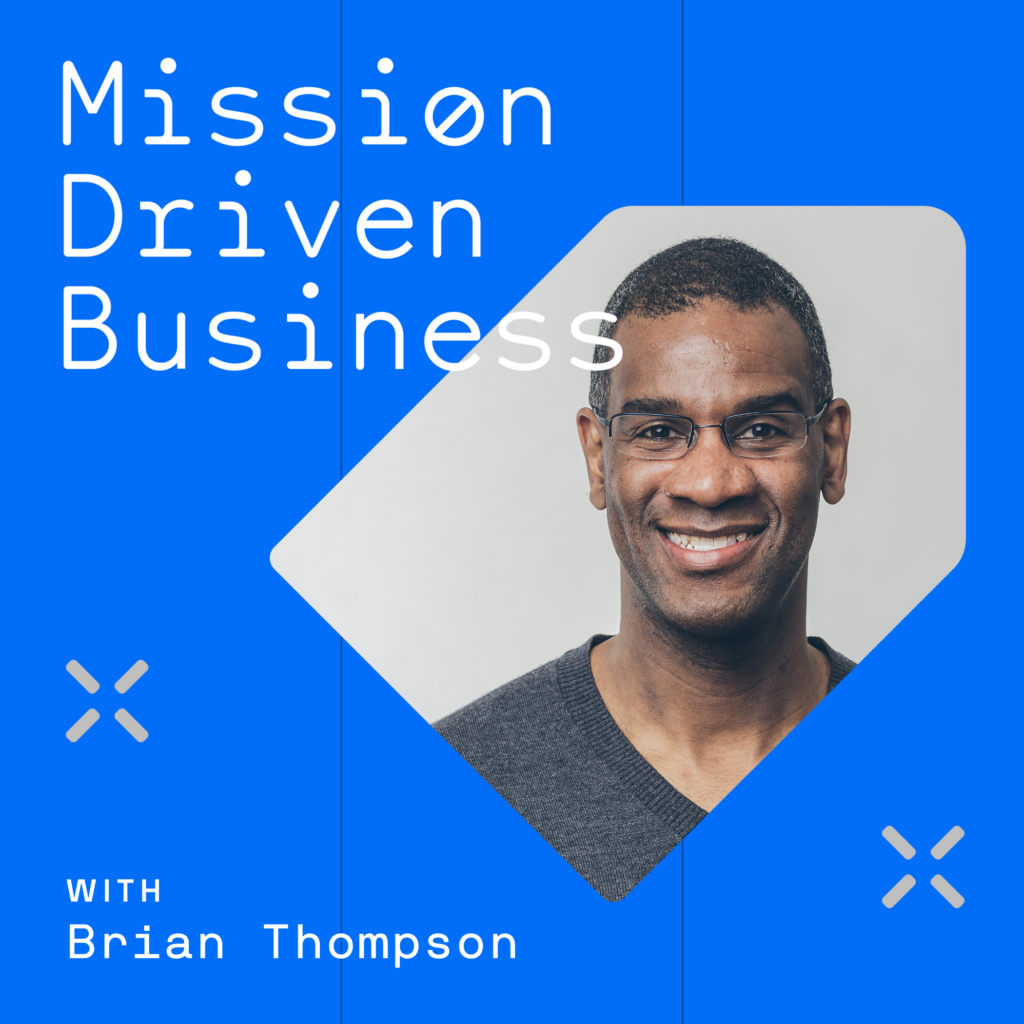
Every entrepreneur hears the same message when they start a business: grow, grow, grow. More revenue, more clients, more recognition. In this episode, Brian Thompson asks a different question: “How much is enough?” Drawing from a presentation he gave at a conference for independent financial advisors called The Business of Enough, Brian shares his personal journey toward defining enough, three mantras that have guided his business decisions, and a practical three-step framework for pursuing enough in your own business.
When the Business Growth Narrative Stopped Working
Brian opened BTF in August 2016 after a decade practicing tax law, motivated by a desire to serve the LGBTQ community, to build something that reflected his values, and to create more control over his professional life. Early on, he measured success the way most entrepreneurs do: client count, revenue, recognition. He was named to Investment News 40 Under 40, started writing for Forbes, received awards, and was invited to speak at conferences. On paper, things looked great. Behind the scenes, his personal life was falling apart. A difficult marriage was ending in divorce, and that experience forced a fundamental reckoning with what he actually needed from his business. Brian stopped asking how big he could make it and started asking what kind of life he needed it to support. The answer came down to three simultaneous goals: flexibility, time, and money.
Three Mantras for Pursuing Enough
Brian shares three mantras that have shaped his thinking and his business decisions over the past decade.
1. There is no there.
Most entrepreneurs carry a quiet belief that some future milestone will finally make everything feel settled. “When I reach six figures, I will feel secure.” “When I have twenty clients, I will feel confident.” Brian has experienced this himself and watched clients go through it repeatedly. You reach the milestone, feel great, and then the goalposts move.
The point is not to stop setting goals. It is to recognize that the process matters as much as the outcome, and that what feels missing right now is often something that can be cultivated today rather than deferred to a future achievement.
2. You can build whatever you want.
Who you serve, how you serve them, what you charge, how you structure your days, whether you work alone or build a team: all of it is yours to decide. The problem is that entrepreneurs tend to look at what others in their industry are doing and treat those examples as instructions. Other businesses can inspire and teach, but they are not blueprints.
Your business should reflect your mission, your values, your capacity, and the life you want to live. Brian built a practice focused on LGBTQ entrepreneurs running mission-driven businesses, with the flexibility to pursue creative projects like this podcast. That works for him. Your version might look completely different. The important thing is that you are making the choice deliberately.
3. Build, measure, learn.
One of the biggest misconceptions about enough is that you have to figure it out perfectly before you start. You do not.
Think of your business as an ongoing experiment. Try working four days a week and pay attention to what actually changes. Are you more rested? Are you spending time on the things you said mattered? Or did you just compress five days of work into four? Track things beyond financial metrics: energy, stress, satisfaction, the quality of your client relationships, the time you have for people you love. The goal is a business that keeps moving toward supporting the life you want right now.
The Challenge of Comparison
Comparison is one of the hardest obstacles on your journey to pursuing enough. Seeing someone else generate twice your revenue, build a bigger team, or land a speaking invitation can make a business you felt good about yesterday suddenly feel inadequate. Nothing about your business actually changed, just your perception of it, because you started measuring it against someone else’s definition of success. When this happens ask yourself whether you actually want that person’s business, or just the visible result. The revenue and recognition are visible. The stress, the trade-offs, the difficult decisions, and the sacrifices are not. We compare our insides to other people’s outsides, and that is never a fair comparison.
Enough Changes
Something that often gets overlooked: enough is not a fixed destination. Ten years later, Brian’s goals of flexibility, time, and financial security still matter but they look different. Slow mornings, tennis and kickball with friends, the freedom to travel, and work with clients whose missions genuinely inspire him. That is his enough today. It may look different again in another ten years. Changing your definition of enough now means earlier versions served the season of life you were in at the time. Enough is a practice, not a destination.
A Three-Step Framework for Pursuing Enough
Use this practical framework built around defining, building, and revisiting.
Define it.
Get specific about what enough means to you right now across three dimensions: money, time, and flexibility. How much does your business need to generate to cover your personal expenses, savings goals, taxes, and desired lifestyle? How many hours do you actually want to work? How much vacation, family time, and space for personal interests do you need? What kind of control over your schedule matters to you? Start with the life you want, then work backward to determine what the business needs to support it.
Build it.
Align your business decisions with your definition of enough. Review your pricing. Are you charging enough to support your income goals while serving the number of clients you actually want? Look at your client relationships. Are they energizing or depleting? Consider your team. Would hiring someone create more flexibility, or would managing employees introduce responsibilities that do not fit the life you are building? Growth can absolutely be part of pursuing enough. Sometimes raising prices, hiring support, or investing in better systems is exactly what creates more time and flexibility. The key is that those decisions serve a clear purpose.
Revisit it.
Build, measure, learn applies here too. Incorporate your definition of enough into regular business reviews. Quarterly is a good cadence. Beyond reviewing revenue and expenses, ask yourself whether you are working the hours you want, enjoying the work, and making time for the people and activities that matter. If something feels off, that is useful information. Make adjustments and keep going.
Your Action Step
This week, sit with and answer these three questions to define success on your own terms:
- What do I need my business to provide in this season of my life?
- What am I unwilling to sacrifice in pursuit of more?
- If I stopped trying to prove I could build more, what would I choose to build instead?
Take five minutes to write down your answers, then choose one concrete action you can take this month to bring your business closer to your definition of enough. It might be setting a revenue target based on your actual financial needs, time blocking your calendar, or reviewing your client list. Whatever it is, make it intentional. And if you are not sure what enough looks like yet, start experimenting. Build, measure, learn, and give yourself permission to change along the way.
Resources + Links
- Newsletter Sign Up
- Follow Brian Thompson Online: Instagram, Facebook, LinkedIn, X, Forbes
- Follow & review the podcast: on Spotify and Apple Podcasts
About Brian and the Mission Driven Business Podcast
Brian Thompson, JD/CFP®, is a tax attorney and Certified Financial Planner® who specializes in providing comprehensive financial planning to LGBTQ+ entrepreneurs who run mission-driven businesses. The Mission Driven Business podcast was born out of his passion for helping social entrepreneurs create businesses with purpose and profit.
On the podcast, Brian talks with diverse entrepreneurs and the people who support them. Listeners hear stories of experiences, strength, and hope and get practical advice to help them build businesses that might just change the world, too.